Everything you need
Built for a household, not a solo account.
Every one of these is shared household state — not one partner's private view. Here's what that looks like in practice.
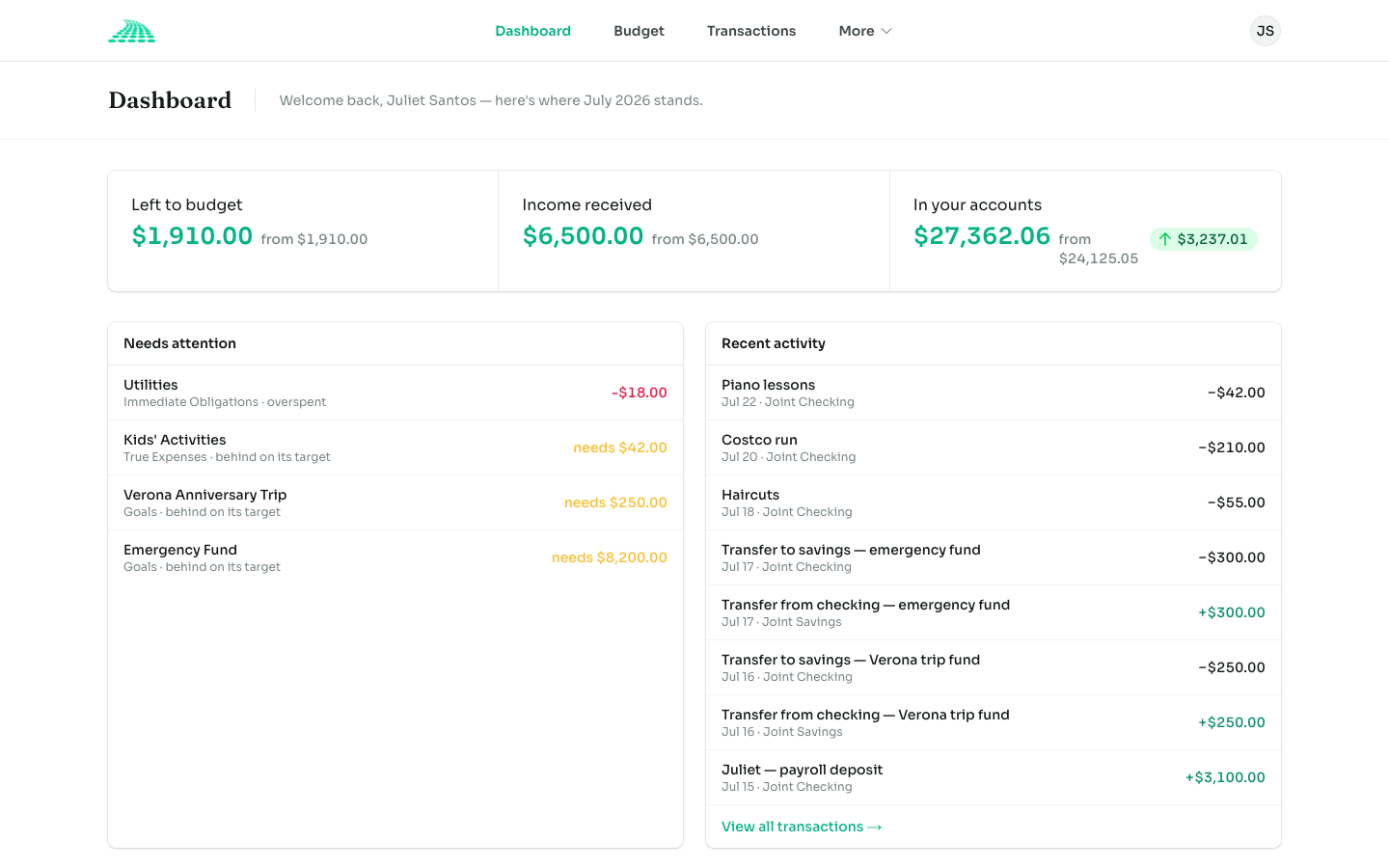
Give every dollar a job
Envelope budgeting & goals
Organize categories into groups, assign this month's income to each one, and set targets — save toward a date, refill monthly, or just keep a cushion on hand.
- Save-by-date, refill-monthly, and have-on-hand targets
- Category groups you control the order of
- Carry last month's plan forward in one click
One trip, five categories
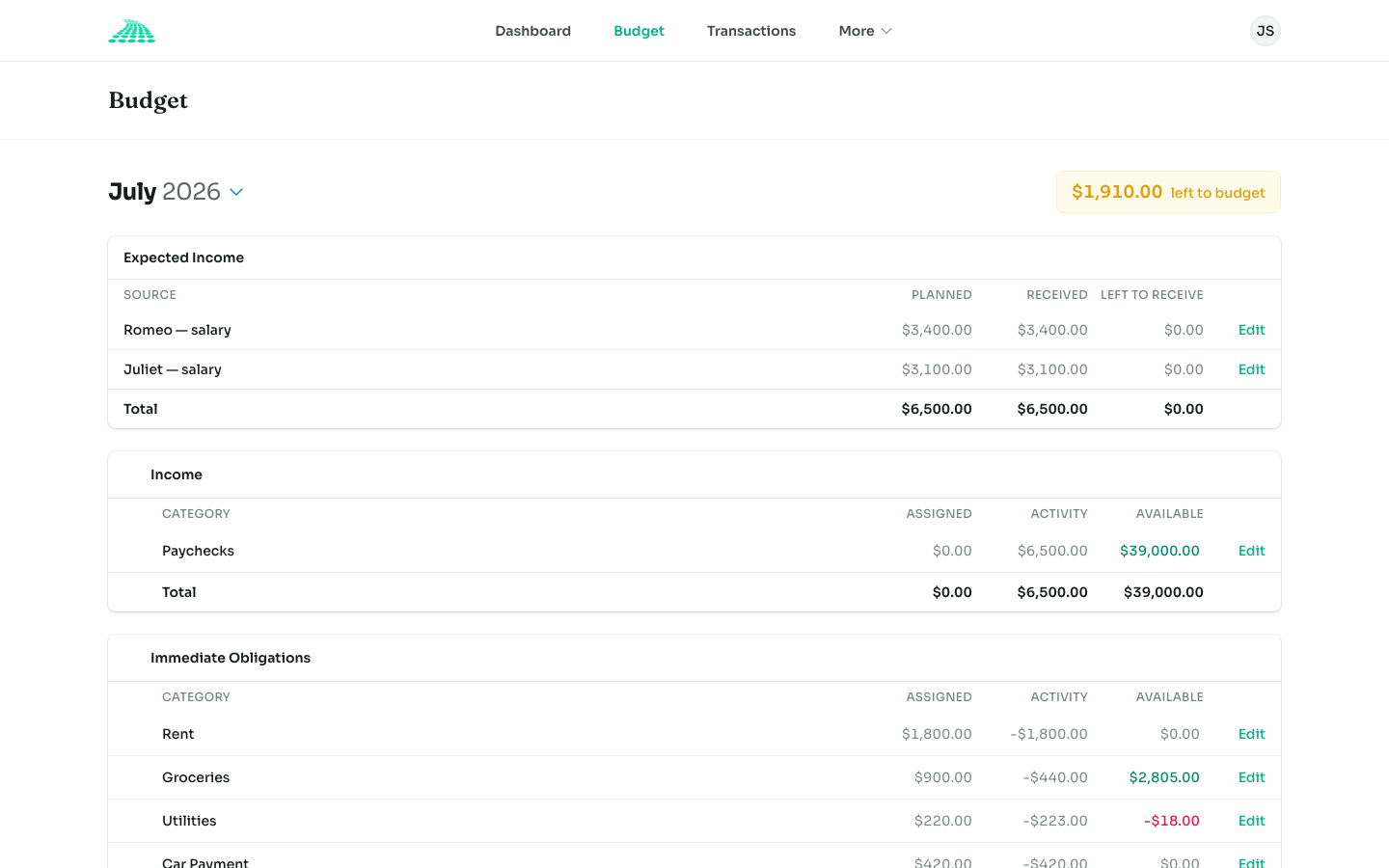
Transactions & splits
Real spending rarely fits one envelope. Split any transaction across as many categories as it actually touched, and track transfers between accounts as what they are.
- Expense, income, and transfer types
- Multi-category splits per transaction
- Running balance per account
Trust the numbers
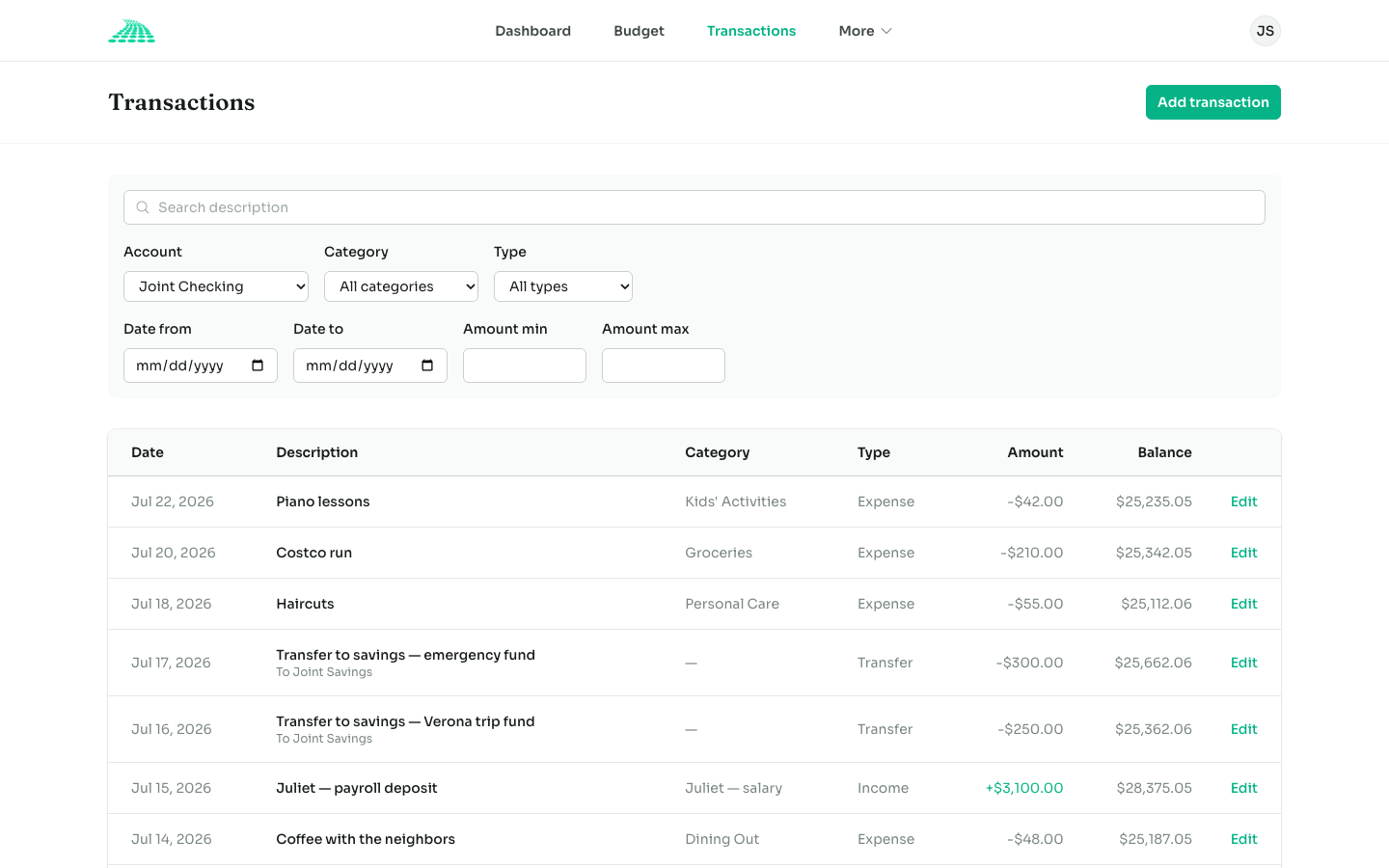
Reconciliation
Check off transactions against your bank statement and lock in a reconciled balance — so the budget you planned matches the account your bank shows.
- Statement-date reconciliation per account
- Locked, reconciled transaction history
- Last-reconciled date always visible
See the pattern
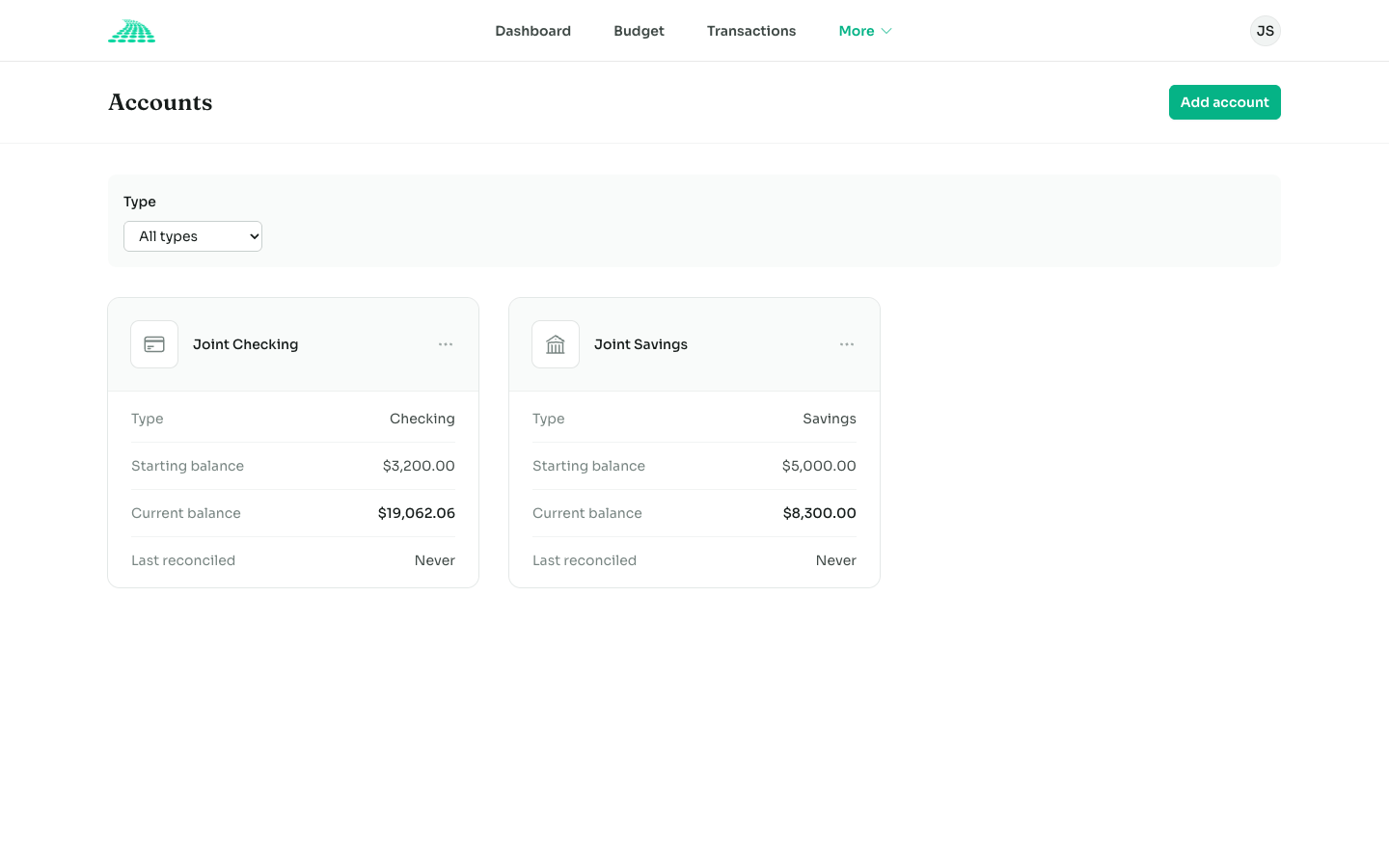
Reports
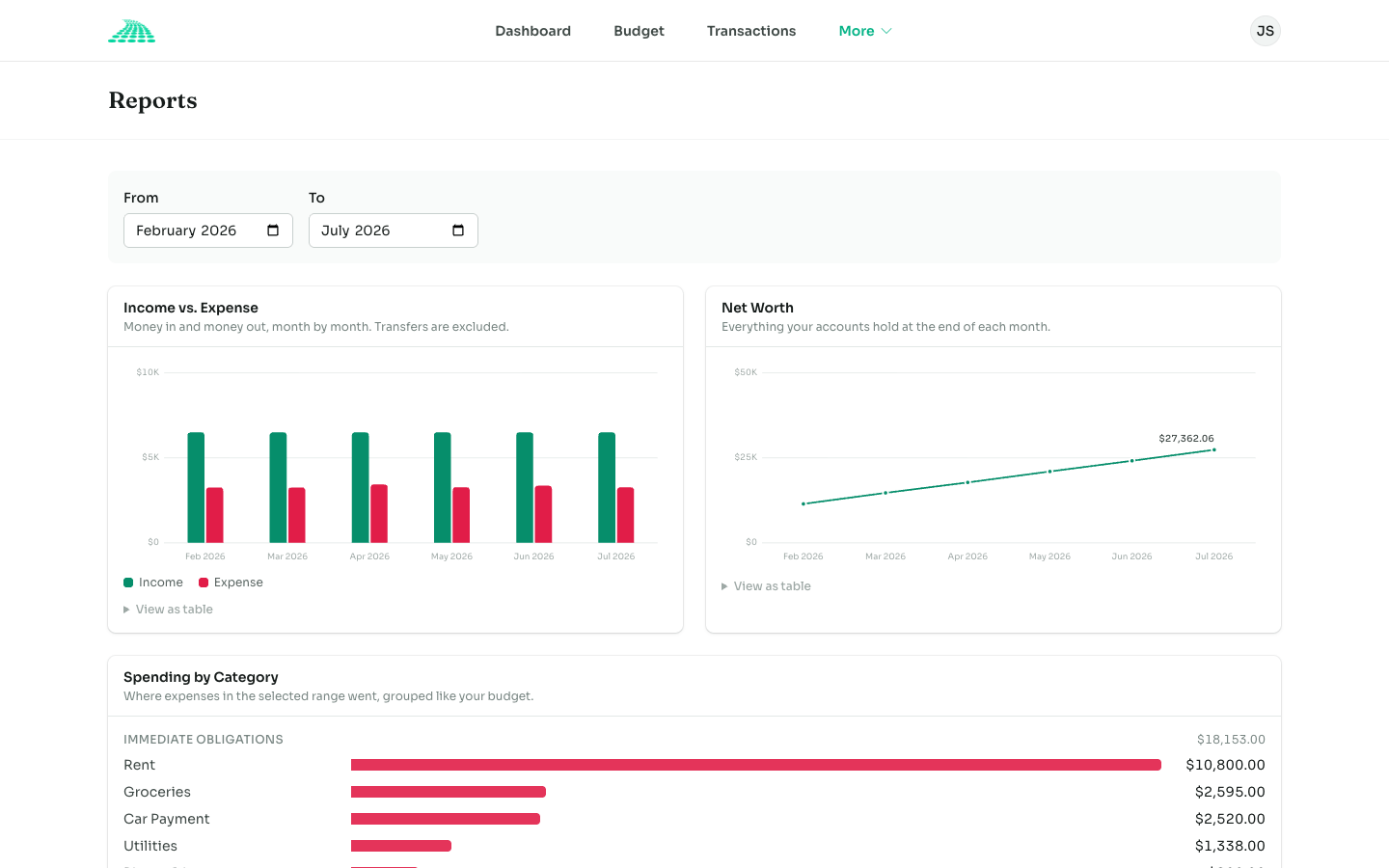
Spending by category, income versus expenses month over month, and a net-worth trend — the view that turns six months of small decisions into a clear picture.
- Date-range spending breakdown
- Monthly income vs. expense
- Cumulative net-worth trend
Six months in, they'd never go back to budgeting alone.
It used to be one partner checking the banking app at midnight and hoping. Now it's a shared dashboard, a funded emergency fund, and a vacation they're paying for in cash because they planned it together.
No card required.